
With fixed-up violin donations, retired professor extends opportunity to play
November 19, 2025
Author: Dave Roepke | Image: Christopher Gannon
Author: Dave Roepke | Image: Christopher Gannon
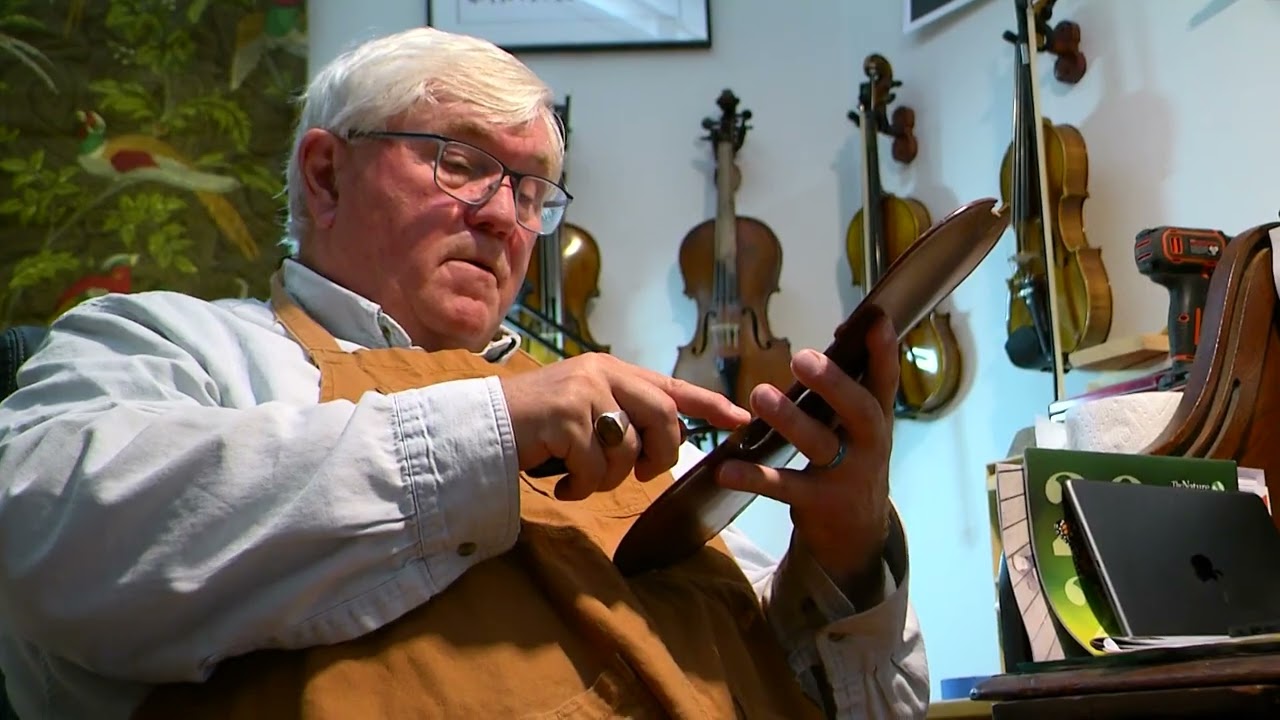
Paul Lasley still remembers how he felt playing the only conspicuously silver-colored metal clarinet in the elementary school band.
Lasley's parents couldn't afford an instrument when the elementary band was forming in his hometown of Queen City, Missouri, so he played what the school had. His classmates in the clarinet section had black wooden models, newer and nicer than his dinged-up loaner with a scruffy-looking case. He appreciated the opportunity, but he couldn't help but wish the borrowed clarinet wasn't such an obvious outlier.
"The quality of my playing was just as good as anybody else's, but there still was a stigma. It made me feel disadvantaged," he said.
Lasley made a quiet vow to himself back then. Someday, he'd repay that debt by providing fledgling musicians with instruments they would be proud to borrow. Six decades later, the former Iowa State University sociology professor is making good on the promise. In the last year, he has fixed up and donated 18 used violins to an instrument drive run by staff at the Iowa State Center's Stephens Auditorium. Musical instruments collected in the drive are given to local school districts, which loan them to band and orchestra students in need.
Refurbishing and donating violins to children combines three of Lasley's passions: woodworking, playing music and paying it forward.
"If only one kid who plays one of those 18 violins bonds with it, and they play until they are an old person like me, that's a gift. That's a gift to me, knowing there are people out there who will follow in my footsteps," he said.
Playing music has been a through line in Lasley's life, a cherished family tradition he's more than upheld. He recalls sitting on his grandma's lap as a 4-year-old, learning to press the keys on her pump organ as she worked the pedals. After starting with the clarinet, he later played saxophone in the high school band and sang in the choir. Attending a choir competition at the University of Missouri inspired him to go to college there, where he eventually earned a doctorate in sociology.
"Music introduced me to a world that was a new adventure, a new culture. It introduced me to so many new people and opened so many doors," he said.
Lasley was hired in 1981 as a professor in the sociology department, with an extension appointment as a rural sociologist. During much of his time on faculty, he had a side hustle leading a light jazz ensemble, Paul Lasley and the Guys. With the Guys, he played stand-up bass, his mother's instrument of choice.
Though he had always been enamored with his great-grandfather's instrument, the violin -- or, as Lasley prefers to call them, fiddles -- he didn't learn how to play one until after retiring in 2021. When the neck broke loose on the fiddle he was using for lessons, he figured he could fix it himself. Making furniture has been another long-standing hobby, so he had some of the necessary clamps, planes, chisels and glues.
The repair turned out well, and one mended violin led to another and eventually a whole lot more. While Lasley is quick to point out he's no luthier -- an expert who builds and restores stringed instruments -- a makeshift fiddle shop soon overtook his home office as family and friends helped hunt thrift stores, garage sales and antique shops for old violins primed for a revival.
"My teacher would probably say, 'I wish you'd spend more time practicing than repairing,'" Lasley said.
Sixteen fiddles hang from the walls of Lasley's office-turned-shop, about half of his current supply. To help track which one's which, he gives each a name, typically in honor of who gave or sold the instrument to him.
"This is Raymond here, for example. And this one? This one is Leroy," Lasley told a visitor during a recent visit to his apartment at Northcrest Retirement Community.
Lasley's admiration for fiddles extends back decades. Before his post-retirement lessons began, he already had collected a handful. He appreciates the elegant craftsmanship, the attention to detail, their unique timbres and patinas.
"Just look at the shimmer on this, how perfectly everything fits together, all the joints," he said as he showed off a completed restoration.
Most of his repairs involve strengthening or reassembling a violin's body or neck, often adding fresh strings and a brand-new case and bow. None of the instruments he fixes up for students are especially valuable, but he makes sure they shine. He doesn't sand away any grooves and etching from prior owners, preferring to let each one retain their history.
"If these fiddles could talk, I'd love to know their stories," he said.
The first 12 fiddles Lasley repaired went to a nonprofit that runs a community bluegrass band for youth in Chandler, Arizona, where he and his wife had a winter home at the time. Last January, he learned of the Stephens Auditorium instrument drive and anonymously dropped off six violins in the collection cart in the lobby of the Stephens ticket office.
Spotting a social media post by chance, Stephens staff figured out Lasley was the source of the influx of violins. They have been running the drive since 2023, and so far have collected 113 musical instruments to distribute to local schools. No one has contributed more than Lasley, who donated another dozen violins in August just before the school year's start and plans to give another dozen or so before next year's school year begins.
"It's just incredible to have someone with so much passion for music help others find that same passion. Paul is allowing so many more young people to have that opportunity," said Tammy Koolbeck, Stephens Auditorium executive director.
The Stephens Auditorium instrument drive runs continuously, and donations are welcome any time of year. Supporting musical instruction is a natural fit for a venue that frequently hosts concerts, and local band and orchestra directors have been appreciative.
"I've had teachers tear up when they see the instruments they're getting," said Lorna Carroll, outreach coordinator for Stephens Auditorium.
One of those thankful instructors is Jotham Polashek, who teaches orchestra at Ames' Fellows, Meeker and Sawyer elementary schools.
"I think what he's doing is amazing, and we're really grateful," he said of Lasley.
Across all five public elementary schools in Ames, there are more than 320 fourth and fifth graders in orchestra this year. Violin is the instrument beginning orchestra students select most frequently, and it's difficult to keep enough loaner inventory on hand to meet the demand, Polashek said.
"Every single year, we run fresh out of violins. We want to provide access to as many students as possible, but they go very quickly," he said.
Beyond learning to play music, participating in band and orchestra has other benefits. Studies have shown that students in music programs have better attendance, sense of belonging and academic performance.
"It's life-changing for some kids," Carroll said. "These students will probably never meet Paul. But look at the lives he's touching out of pure generosity."
For Lasley, providing school children with a quality instrument isn't just a fulfillment of a long-held dream. It's also a statement, he said. It's his way of showing music is important.
"Music is the language of the soul," he said, a phrase he saw at a musical instrument museum that resonates deeply. "It's part of our being and our culture. It's our future."
To donate a violin in need of repair to Lasley for the Stephens Auditorium instrument drive, contact him at plasley@iastate.edu. Smaller size models are especially in need. Lasley will take violins in pieces, either to fix or use as parts for other models.
